Architectural Tactics
 Edit on GitHub
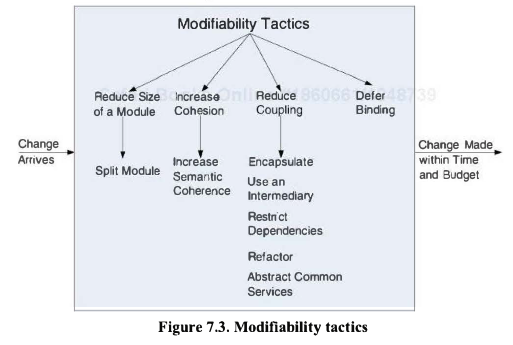
Architectural tactics are techniques that an architect can use to achieve the required quality attributes. These tactics direclty affect the system's response to some stimulus. In order words, a tactic is a way of designing the architecture of the system so that it has a particular response to a given stimulus, such as request for modification.
The focus of a tactic is on a single quality attribute response. Thus, there is no trade-off consideration within a tactic.
Tactics for Availability
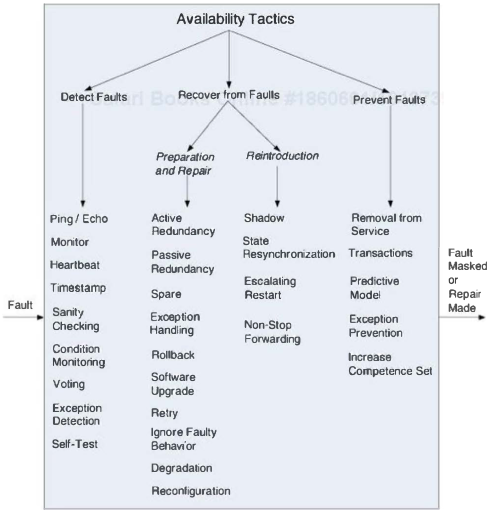
Availability tactics are designed to enable a system to endure system faults so that a service being delivered by the system remains compliant with its specification 2.
Tactics for Interoperability
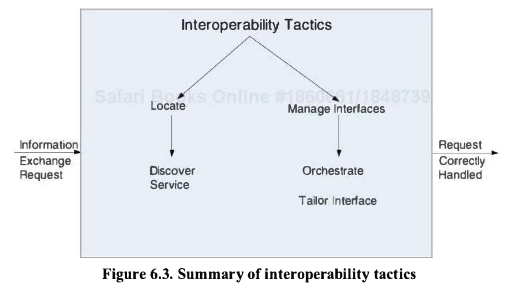
There are two categories of tactics for interoperability:
- Discovery service when the systems that interoperate must be discovered at runtime
- Managing interfaces
- Orchestrate: uses a control mechanism to coordinate and manage and sequence the invocation of particular services, which could be ignorant of each other. In other words, orchestration scripts the interaction.
- Tailor interface: add or remove capabilities to an interface.
Tactics for Modifiability